

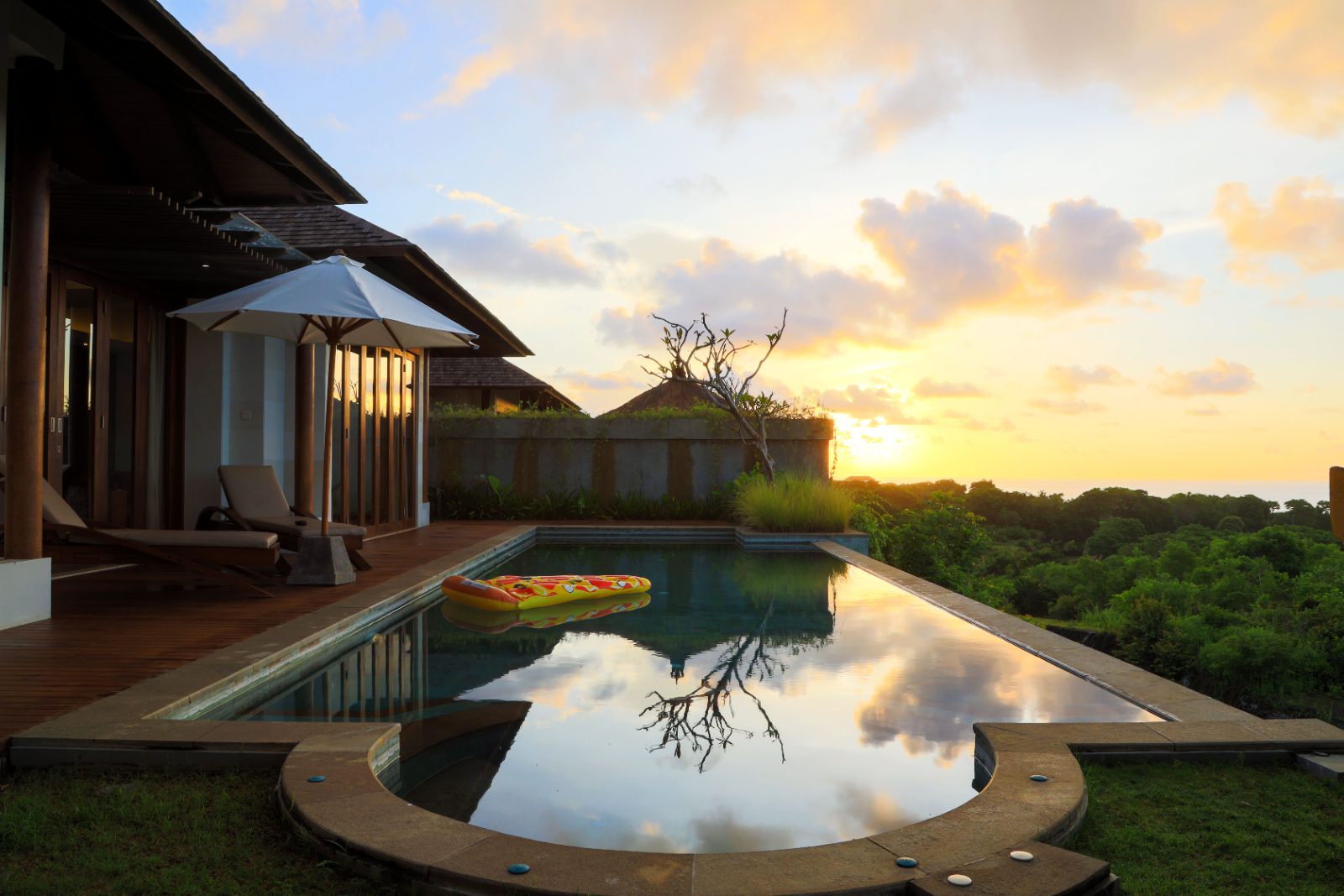
There is no single cost of living in Bali. A modest lifestyle in a local area is very different from renting a large villa in Canggu, using private healthcare and sending children to an international school. The figures in this guide are indicative. What you actually spend will depend on your choices.
1. Housing
Housing is typically the largest single cost. A basic studio or one-bedroom in a local area can be considerably less expensive than a villa with a pool in an international-facing neighbourhood. Indicative Numbeo data for Denpasar (updated June 2, 2026, crowdsourced) shows a one-bedroom apartment in the city centre at approximately IDR 6.78 million per month, and outside the centre at approximately IDR 2.85 million per month. These figures reflect Denpasar apartments and are not representative of villa rentals in areas such as Canggu or Seminyak, where prices vary considerably based on property type, size and location.
Annual lease arrangements in popular expatriate areas are typically priced in USD. Always clarify currency, payment schedule and what is included before signing. Our Renting guides cover what to look for in a Bali rental contract.
2. Food and Groceries
Local warungs and markets offer food at prices significantly lower than international-facing restaurants and supermarkets. Indicative Numbeo data for Bali (updated June 11, 2026, crowdsourced) shows an inexpensive restaurant meal at approximately IDR 50,000, a cappuccino at approximately IDR 40,000, one kilogram of rice at approximately IDR 18,000, and twelve eggs at approximately IDR 36,000. These are indicative figures, not official government statistics, and will vary by location and vendor.
Imported goods — certain dairy products, wines, specialty foods — cost considerably more than local equivalents. If your lifestyle relies on imported products, this will increase grocery costs noticeably.
3. Restaurants and Cafés
Bali has a wide range of dining options at all price points. Eating at local warungs daily is very affordable. Dining regularly at international restaurants, beach clubs and specialty venues in areas like Canggu or Seminyak can add up quickly. The difference between a local food lifestyle and an international restaurant lifestyle is significant in monthly terms.
4. Transport
Most residents rely on motorbikes, cars or app-based ride services. Fuel for a motorbike is the most economical daily transport option. Indicative Numbeo data (Denpasar, June 2026) shows gasoline at approximately IDR 12,600 per litre. If you use ride-hailing apps frequently or maintain a car, transport costs increase. Traffic congestion in popular areas can also increase travel time and fuel consumption materially.
5. Internet and Mobile
Indicative Numbeo data (Denpasar, June 2026) shows a mobile plan with 10GB or more at approximately IDR 74,000 per month and broadband at 60 Mbps or more at approximately IDR 286,000 per month. Internet quality varies by area and provider. If your work depends on reliable connectivity, verify speeds at your specific property before committing.
6. Healthcare and Insurance
Private healthcare costs in Bali vary depending on the facility and the nature of treatment. Private health insurance is strongly recommended and its cost depends on your age, health status and the coverage level selected. This is a recurring monthly cost that should be budgeted for explicitly. Do not treat informal local clinics as a substitute for adequate insurance coverage if you have ongoing health needs.
7. Fitness and Leisure
Gym memberships, yoga studios and wellness facilities in popular expatriate areas are available at a range of price points. Some are comparable to European or Australian prices, particularly at premium facilities. Outdoor and beach activities have little or no cost. Budget this line according to your actual habits.
8. Education
International schooling is a material cost for families. AIS Bali and Dyatmika both publish current fee information on their official websites. Fees vary by year level and school. Do not assume one school's fees reflect the market broadly. If schooling is part of your budget, obtain current figures directly from the school before making financial projections.
9. Example Lifestyle Scenarios
The following scenarios are illustrative only. They assume a single adult without dependants unless stated. Costs exclude international schooling and significant medical expenses.
- Budget-conscious (local area, motorbike, local food): Housing in a modest non-villa property, eating mostly at warungs, minimal transport costs and no international school produce a relatively low monthly cost compared to most Western cities.
- Comfortable single (mid-range villa, mixed dining, gym): A one- or two-bedroom villa with a pool in an established area, a mix of local and international dining, gym membership and regular ride-hailing produces a moderate monthly total.
- Higher-end expatriate (large villa, car, imported goods, premium health insurance): A larger villa in a premium location, car running costs, imported groceries, premium insurance and regular dining at international venues produces a monthly cost comparable to or exceeding many European cities.
- Family with international schooling: Add international school fees — which can be substantial — to any of the above scenarios. This materially changes the monthly total.
10. What Makes Bali More or Less Expensive
More expensive: Large villa with pool in a popular area, imported goods, international school, premium health insurance, car, regular international dining, beach club visits.
More affordable: Local-area accommodation, motorbike transport, eating at warungs and local markets, local produce, BPJS or basic health coverage, no international schooling.
Most long-term residents find their actual costs sit somewhere in between, shaped by the specific trade-offs they make between comfort, convenience and cost.
11. Frequently Asked Questions
Sources & References
This guide is for general informational purposes only. Property and area conditions change; always conduct independent due diligence.